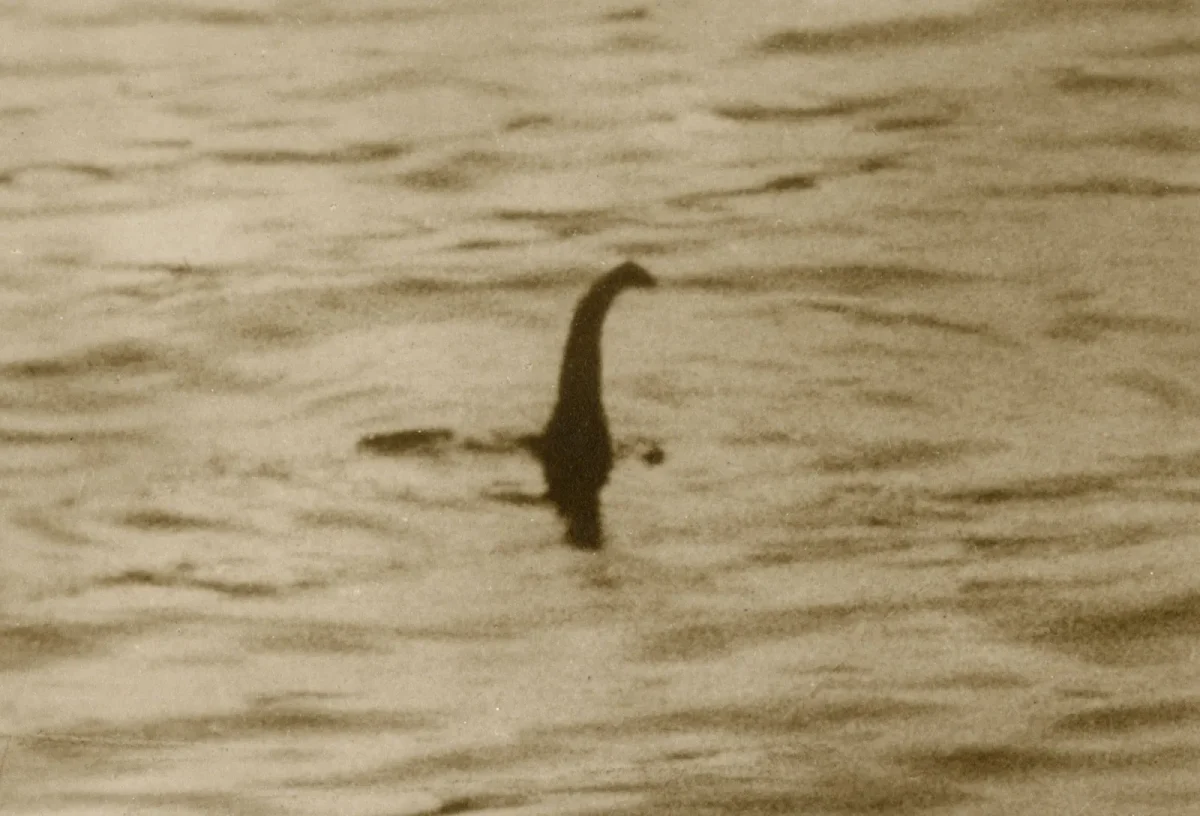
The Loch Ness Monster, also known as Nessie, is a mythical creature in Scottish folklore that is said to be in the Scottish Highlands. It is often described as large, long-necked, and with one or more humps protruding from the water. Popular interest and belief in the creature has varied since it was brought to worldwide attention in 1933. Evidence of its existence is not certain that Nessie is real. The earliest report of a monster in the vicinity of Loch Ness appears in the Life of St. Colombia, in the 7th century AD. According to Adomnán, writing about a century after the events described, Irish monk Saint Columbia was staying in the land of the Picts with his companions when he encountered local residents burying a man by the River Ness.
Believers in the monster point to this story, set in the River Ness rather than the loch itself, as evidence for the creature’s existence as early as the 6th century. Skeptics question the narrative’s reliability, noting that water-beast stories were extremely common in medieval times, and Adomnán’s tale probably recycles a common motif attached to a local landmark. According to skeptics, Adomnán’s story may be independent of the modern Loch Ness Monster legend and became attached to it by proximity and by believers seeking to bolster their claims. Ronald Binns considers that this is the most serious of various alleged early sightings of the monster, but all other claimed sightings before 1933 are dubious and do not prove a monster tradition before that date.